Back to the Future. A Practical Archaeology of DTP
HEAD Geneva
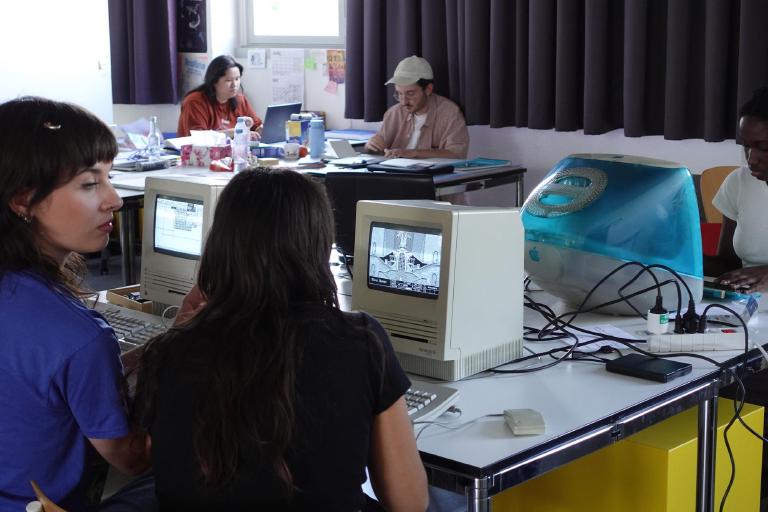
From June 1 to 5, 2026, Julie Blanc led a week-long workshop at HEAD Geneva with a group of graphic design students. Titled “Back to the Future. A Practical Archaeology of DTP” (Desktop Publishing), the workshop combines a concrete production goal with an investigation into the history of desktop publishing tools.
From the monochrome screen of the Macintosh 128K to the fluid interfaces of Adobe InDesign, this workshop offers a hands-on journey through the history of desktop publishing via its emblematic tools. By producing the same poster on machines from different generations, students directly experience the technical constraints, limits and possibilities specific to each era. An exploration where design becomes a field of critical experimentation, revealing how tools shape both forms and ideas.
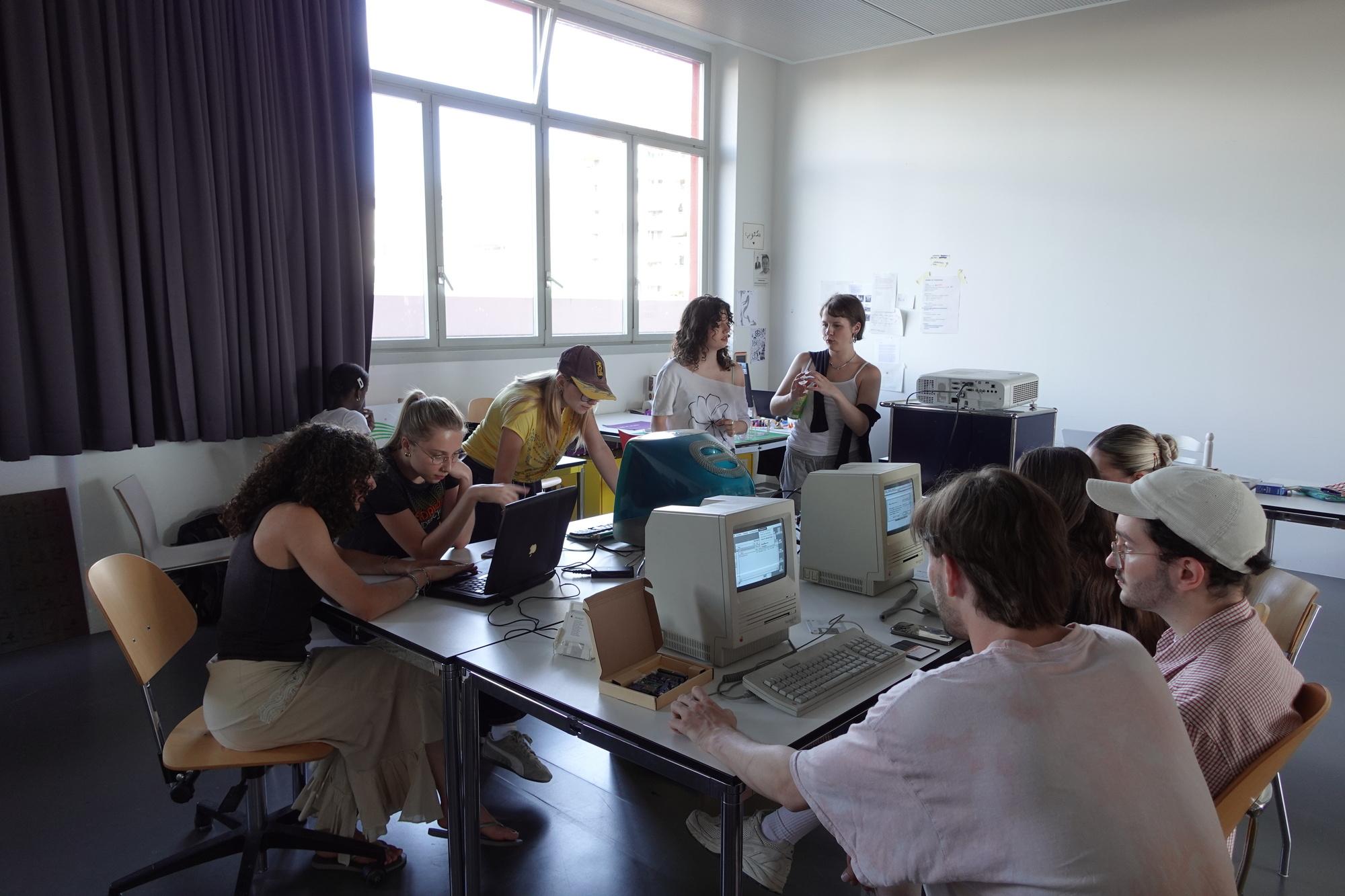
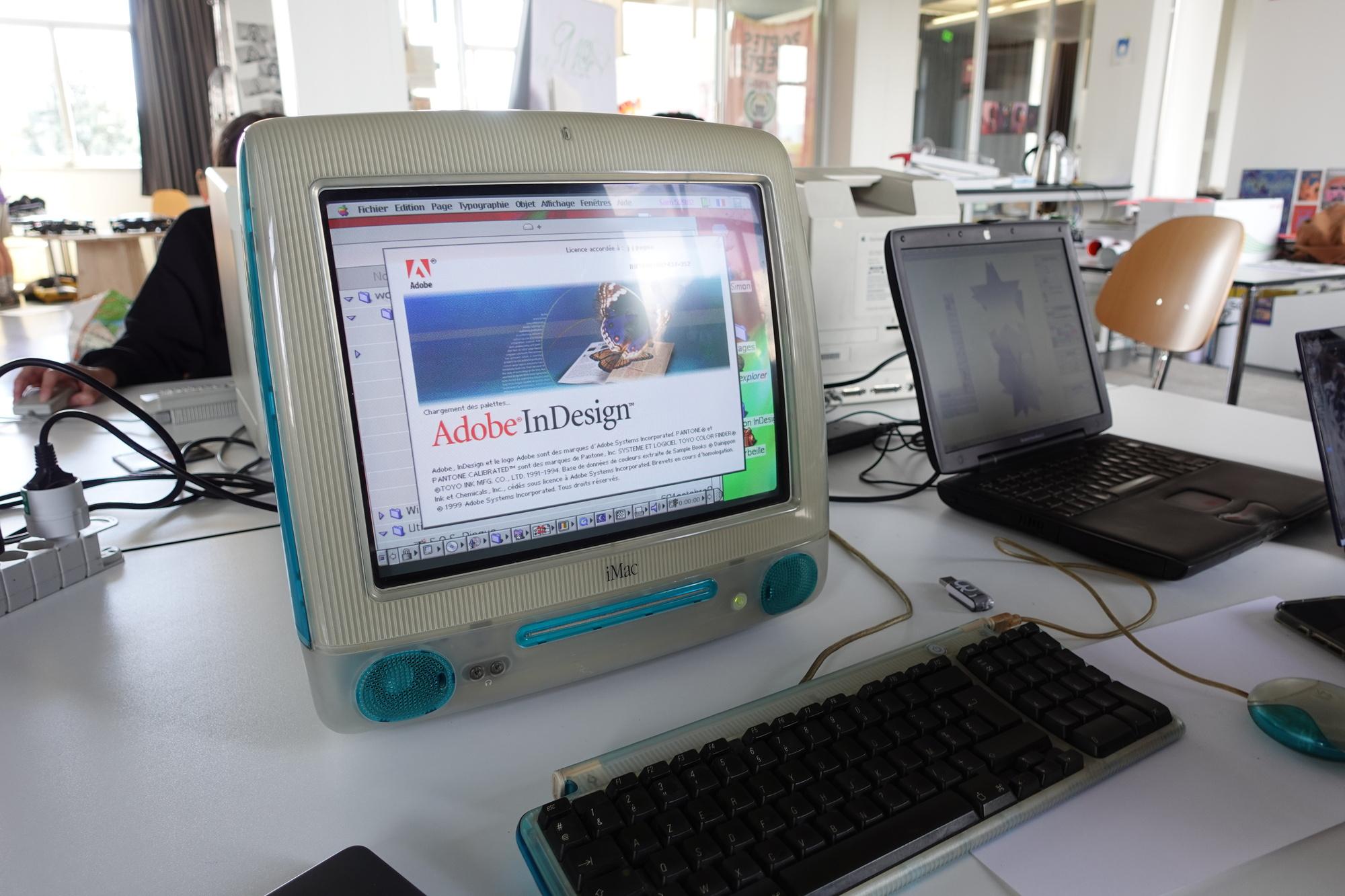
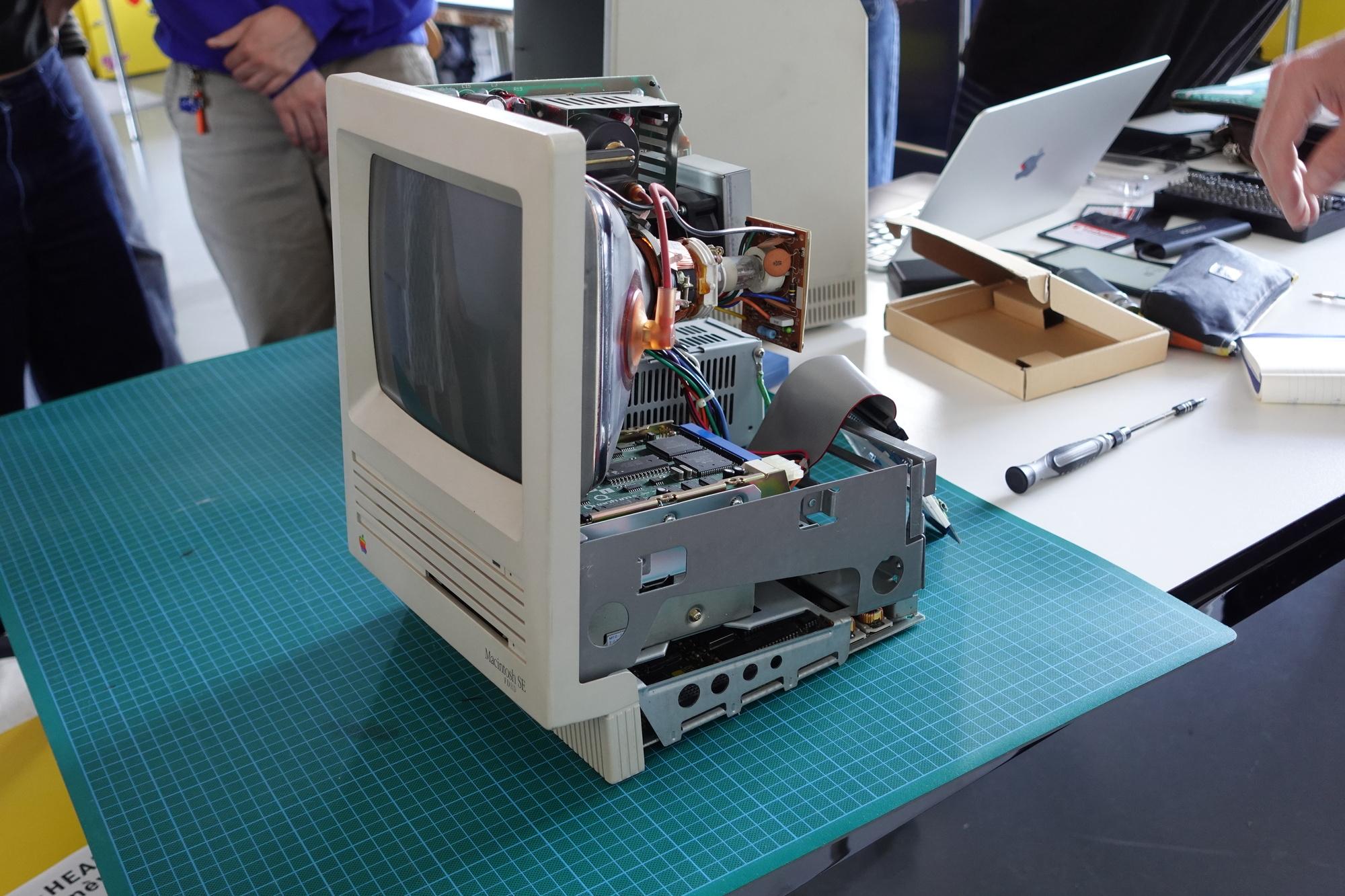
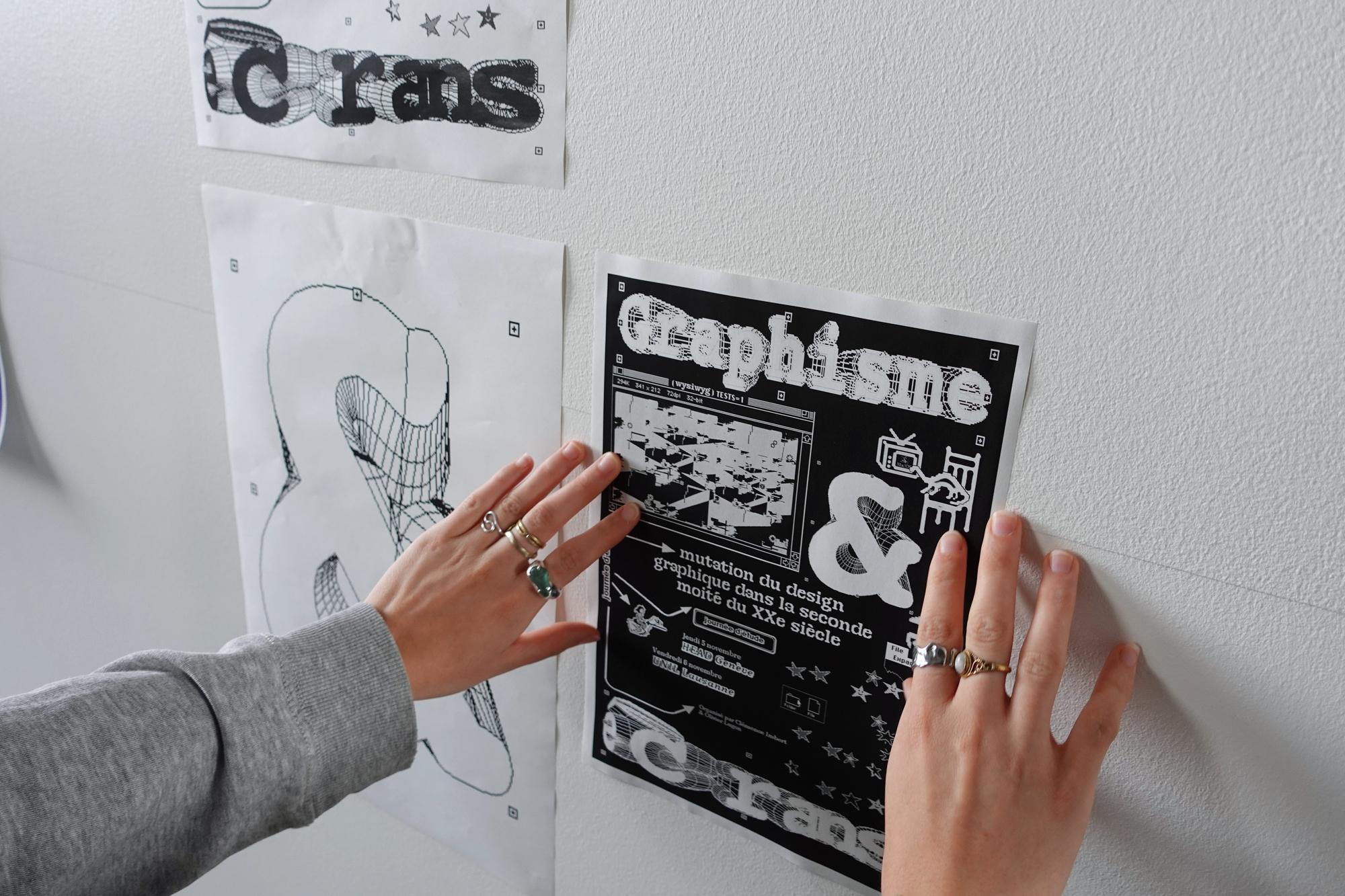
Machines from different generations were used during the workshop: two Macintosh SE computers from 1988, an iMac G3 from 2003, a PowerBook G3 from 1999, and virtual machines installed on the students’ own computers to simulate a 1984 Macintosh. The brief was to design a poster for a study day organized in October in Lausanne. Students were invited to position themselves as observers of their own experience, documenting what these old machines made possible or difficult. This posture of the reflective practitioner, one who questions their own instrumental practices, was at the heart of the workshop’s pedagogical goals.
Throughout the week, students were invited to multiply the traces of their process: sketches, photos, videos, notes on what had surprised, blocked or inspired them. On Wednesday afternoon, each group collectively presented a feature or a striking moment from their exploration. On Thursday, a group discussion allowed them to share their feelings about these old interfaces. The week concluded on Friday with a presentation of the work and an exhibition of the posters produced.
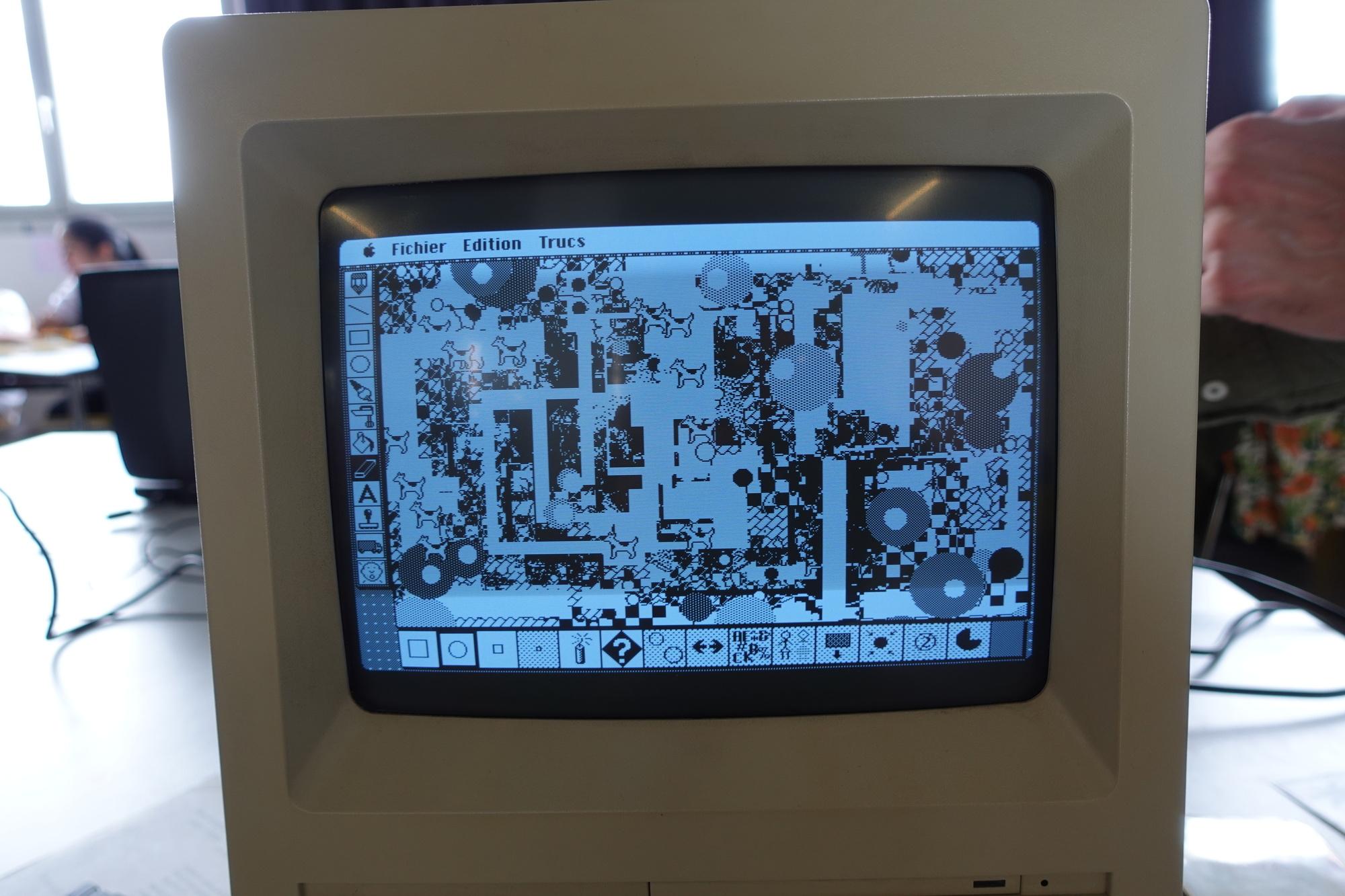
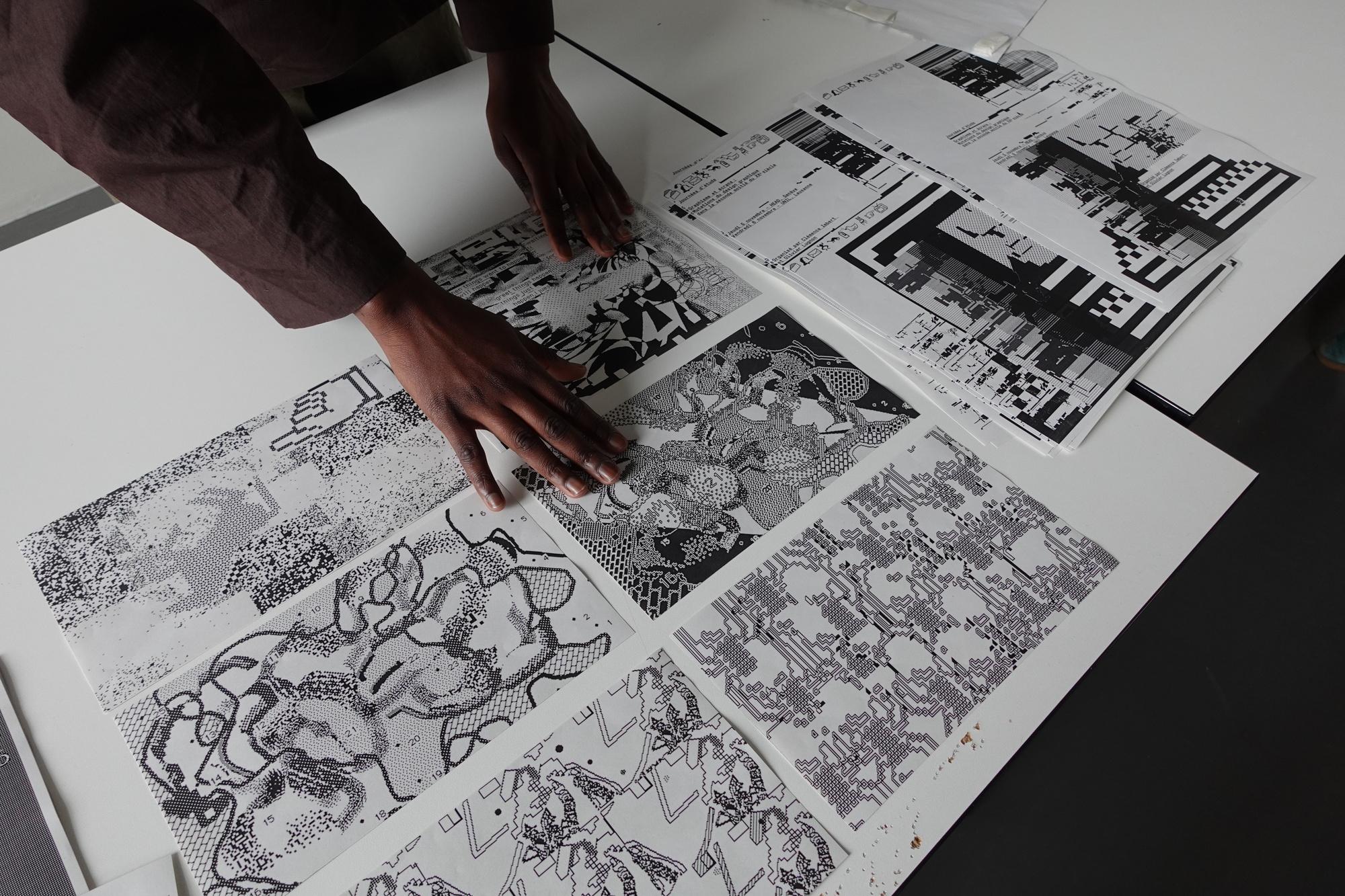
Access to source files often proved more complex than getting to grips with the interfaces themselves, which remained simple to use. Students explored a wide diversity of period software: KidPix and Lightning Paint were the most popular. The final posters blend visuals from several pieces of software, and some layouts were created using the first version of InDesign.
The traces gathered during this workshop, posters and reflective presentations, will feed into the WYSIWYG research project. A first, live and brief documentation can be found on Mastodon (in french).
Thanks to Martin Lafréchoux, present for the first three days, who assisted the group with starting up the machines, converting files and technical support.
Congratulations to all the students for their work! Alix, Yuri, Salomé, Simon, Sabrina, Mariama, Alyssa, Justine, Antonin, Svenja, Esther, Susana, Zoé, Ines, Jennifer, Aaricia, Aliosha, Varvara.
Texte également disponible en français: https://wysiwyg.ch/fr/journal/2026-06-01-workshop-back-to-the-future-arch%C3%A9ologie-pratique-de-la-pao/